
Introduction
In industrial piping systems, bleed rings play a critical role in managing internal pressure, ensuring safety, and enabling accurate monitoring. In high-pressure environments handling steam, gas, and chemicals, even a small imbalance can lead to system failure or safety risks.
This is where bleed rings play an essential role. They provide a safe and efficient way to measure pressure, release trapped fluids, and maintain system balance.
What Are Bleed Rings?
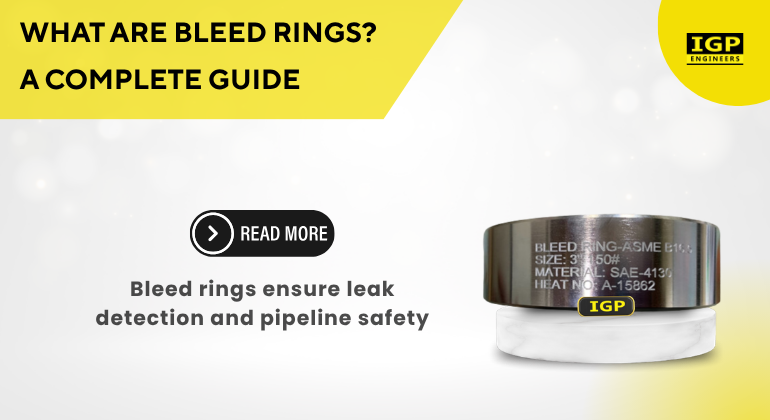
Bleed rings are circular metal components installed between flanges in a piping system. They are designed with one or more tapping holes that allow pressure measurement, venting, or fluid sampling without interrupting the main flow.
In industrial terminology, bleed rings are also referred to as flange bleed rings or pressure tapping rings. While the names may vary, their core function remains the same, providing controlled access to the internal conditions of a pipeline.
Where Bleed Rings Are Installed in a Piping System
Typically, bleed rings are placed between two flanges, often near critical measurement points. This positioning allows engineers to connect instruments such as pressure gauges or valves directly to the system, ensuring accurate monitoring and easy maintenance.
Primary Components of Bleed Rings
1. Ring Body and Structural Design
The ring body serves as the primary framework of the component, usually manufactured from strong metals like stainless steel or carbon steel, enabling it to handle extreme pressure and high-temperature industrial environments effectively.
2. Radial Holes and Tapping Ports
Radial holes, commonly referred to as tapping ports, are essential features that provide controlled access to the pipeline, allowing accurate pressure measurement, fluid sampling, and safe venting without interrupting system operations.
3. Vent and Drain Connections
Certain bleed rings are equipped with vent or drain connections, which help operators release trapped gases or liquids safely, reducing the risk of pressure accumulation and ensuring smoother, safer system performance.
4. Gasket Seating Surfaces
Bleed rings include precision-engineered gasket seating surfaces that ensure a secure and leak-proof fit between flanges, maintaining proper sealing, preventing fluid leakage, and preserving the overall integrity of the piping system.
How Do Bleed Rings Work?
Basic Working Principle
The operation of bleed rings is simple. When positioned between flanges, they form a sealed channel with tapping points that enable operators to access and monitor internal fluids without needing to disassemble the pipeline.
Role of Tapping Holes in Pressure Measurement
The tapping holes in pressure tapping rings are connected to external devices like pressure gauges or transmitters. These devices measure the internal pressure or allow controlled release of fluids. This ensures that operators can monitor system conditions in real time.
For example, in a steam pipeline, a bleed ring can be used to measure pressure at a specific point. By attaching a gauge to the tapping port, engineers can monitor fluctuations and make necessary adjustments without shutting down the system.
Applications of Bleed Rings
Bleed rings are widely used across industrial systems to support accurate pressure monitoring, safe venting, and efficient operations. Their versatility makes them essential in various pipeline and process applications.
| Application Area | Description |
| Pipeline Monitoring | Enables accurate pressure checks and maintains system stability. |
| Flange Connections | Flange bleed rings create measurement points without pipeline changes. |
| Oil and Gas Industry | Supports safe and efficient pressure monitoring operations. |
| Chemical Processing | Helps ensure controlled and reliable fluid handling. |
| Steam Systems | Releases excess pressure and improves system reliability. |
These applications highlight why choosing the right bleed ring supplier is critical for long-term system performance.
How Are Bleed Rings Classified by Types and Specifications?
1. Types Based on Tapping Configuration
Bleed rings are available in different configurations based on the number of tapping holes:
- Single tapping for basic measurement
- Double tapping for differential pressure measurement
2. Material Options and Their Importance
Materials used in bleed rings include
- Stainless steel
- Carbon steel
- Alloy steel
The choice of material depends on factors such as temperature, pressure, and the type of fluid being handled.
3. Size and Pressure Rating Considerations
Bleed rings are manufactured in various sizes to match standard flange dimensions. They are also rated for specific pressure levels, ensuring compatibility with different industrial systems.
4. Compatibility with Flange Standards
Most pressure tapping rings are designed to comply with international flange standards. This ensures easy installation and integration into existing pipelines.
Why Are Bleed Rings Critical for Safety and Accuracy?
Preventing Pressure Build-Up and System Failure
A key advantage of bleed rings is their ability to control internal pressure. By enabling safe venting of trapped fluids, they significantly reduce the chances of equipment damage, system failure, and hazardous incidents.
Ensuring Accurate Pressure Measurement
Reliable pressure monitoring is vital for smooth industrial operations. Bleed rings offer dedicated access points for instruments, allowing consistent and precise readings that help operators maintain optimal system performance and efficiency.
Supporting Safe Maintenance and Operations
Bleed rings improve safety during maintenance by allowing controlled pressure release before servicing. This reduces operational risks and ensures that maintenance activities are carried out in a secure and controlled environment.
Common Mistakes to Avoid When Using Bleed Rings
i) Incorrect Installation Between Flanges
Improper fitting of flange bleed rings can cause leakage and unreliable pressure readings. Ensuring correct alignment and secure placement between flanges is essential for maintaining accurate system performance and operational safety.
ii) Ignoring Proper Alignment and Sealing
Poor alignment or inadequate sealing of bleed rings may compromise system integrity. Checking gasket positioning and proper tightening helps prevent leaks, ensures stability, and maintains consistent performance in industrial piping systems.
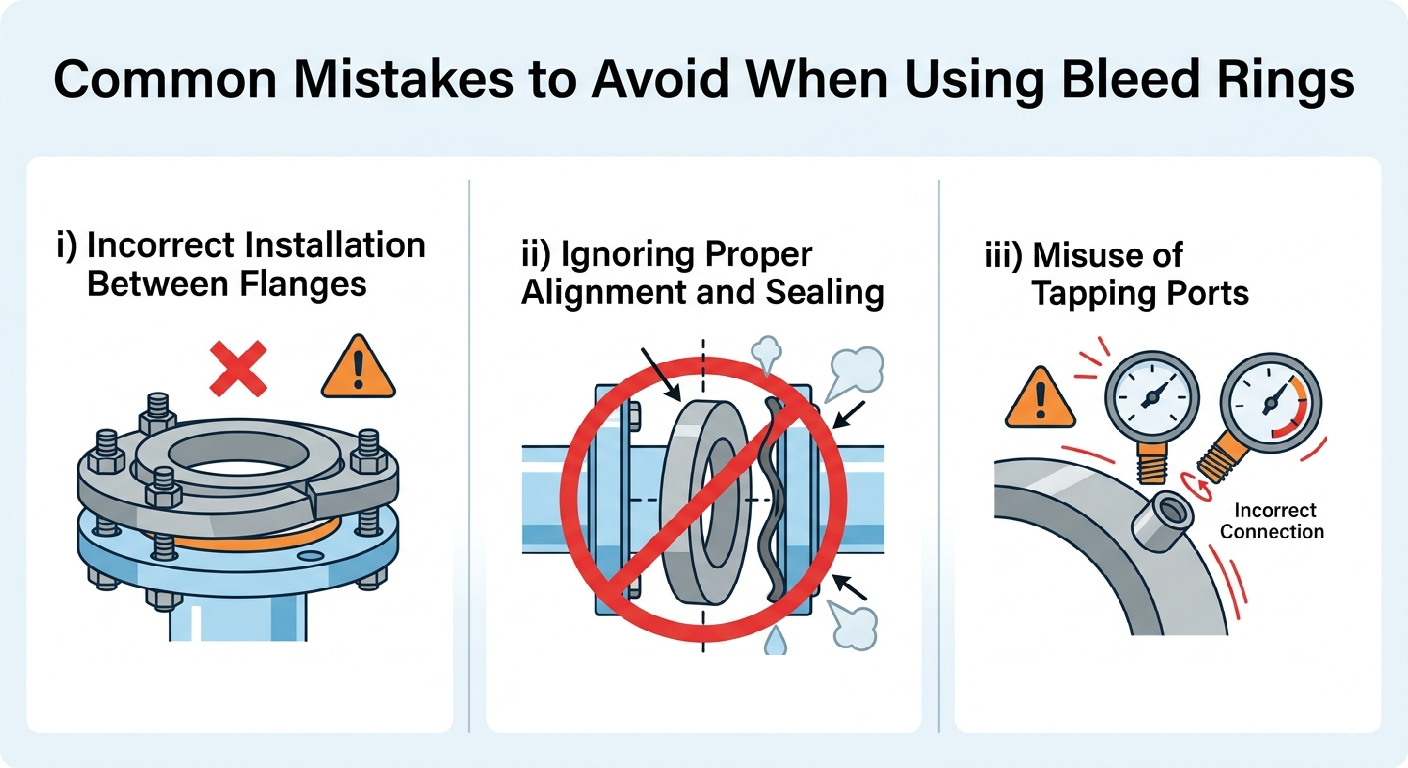
iii) Misuse of Tapping Ports
Incorrect handling of tapping ports in pressure tapping rings can result in inaccurate measurements or safety concerns. Operators must follow proper procedures when connecting instruments or venting fluids to ensure reliable operation.
How IGP Engineers Outstand?
IGP Engineers stands out by delivering high-performance bleed rings made to diverse industrial needs. Our expertise lies in selecting the right materials for demanding environments, ensuring optimal pressure and temperature resistance, and guaranteeing precise compatibility with existing flange systems.
With a strong focus on quality manufacturing, strict inspection standards, and reliable delivery, we build trust among buyers. Our commitment to durability, engineering accuracy, customization capabilities, and consistent product performance makes them a preferred choice for industrial applications.
IGP Engineers delivers reliable precision-engineered flange bleed rings, and durable pressure tapping rings, ensuring safety, accuracy, and long-term industrial performance.
Key Takeaways for Beginners
- Bleed rings play a vital role in industrial piping systems for safe and efficient operations.
- They enable accurate pressure measurement and controlled venting of fluids.
- Their design supports easy maintenance without disrupting the pipeline.
- Simple yet highly functional, they are indispensable in modern industrial applications.
Conclusion
Investing in premium-quality flange bleed rings and pressure tapping rings significantly improves system safety, measurement accuracy, and long-term operational efficiency. For engineers and industrial buyers, understanding their functionality helps in selecting the right components to build reliable, high-performance piping systems. As a trusted bleed ring manufacturer in India, IGP Engineers ensures precision engineering and reliable performance.
Contact us for precision-engineered bleed ring solutions you can trust.