
Introduction
In critical pipeline applications such as oil & gas, power generation, LNG, and chemical plants, one persistent challenge remains: valve leakage. Traditional butterfly valves often fail under extreme pressure, high temperatures, or corrosive environments, leading to costly downtime and safety hazards. Enter triple offset butterfly valves (TOVs) with laminated seal rings, engineered for reliability and precision.
At IGP Group, we have supplied and tested over 1,500 TOVs in diverse industrial scenarios, ensuring zero leakage, fire-safe compliance, and long operational life. This guide delves into the science, performance metrics, and practical advantages of laminated seal rings, illustrating why they are essential for modern high-stakes industrial operations. Readers will gain insight from real-world case studies, lab data, and practical engineering expertise.
What is a Butterfly Valve?
A butterfly valve is a quarter-turn valve designed to regulate flow. While conventional butterfly valves are suitable for low-pressure, general-purpose applications, industries that handle toxic, flammable, or high-pressure media require more advanced solutions.
This is where the Triple Offset Butterfly Valve comes in. The “triple offset” design refers to three specific geometric offsets in the construction of the valve:
- Shaft offset: Prevents friction between the disc and the seat during operation.
- Disc offset: Ensures complete sealing along the entire contact surface.
- Sealing geometry offset: Creates a conical seating profile that allows metal-to-metal sealing without rubbing.
Together, these offsets eliminate wear, reduce torque, and deliver a bubble-tight seal, which is a main requirement in essential energy sectors.
What Makes Triple Offset Butterfly Valves Unique?
Triple offset butterfly valves represent the pinnacle of valve design, combining mechanical precision with durability.
- Concentric valves: Economical but susceptible to leakage under pressure.
- Double offset valves: Reduced friction, but limited performance under high stress.
- Triple offset valves: Feature a conical sealing geometry, eliminating wear and achieving metal-to-metal sealing.
Key Advantages:
- Lower torque requirements → smaller actuators → reduced capital cost.
- Capable of handling high-pressure and high-temperature media.
- Certified for zero-leakage performance (API 609, ISO 15848, ASME B16.34).
- Longer operational life due to reduced seat friction.
- Compatibility with automated systems and smart monitoring.
Essential Role of Laminated Seal Rings
At the core of the triple offset butterfly valve design is the seal ring. While conventional soft-seated valves use elastomers, which can quickly break down under high temperatures or corrosive environments.
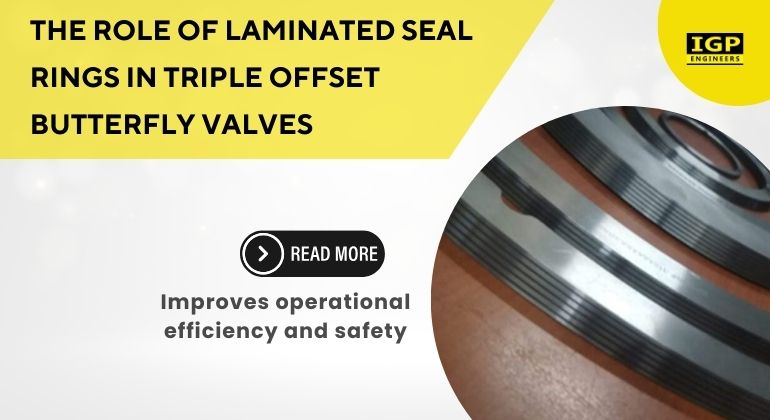
On the other hand, laminated seal rings are specifically engineered to handle the most demanding conditions.
These rings are made up of:
- Multiple alternating layers of metal and graphite (or other robust sealing materials).
- A flexible structure that adjusts to thermal expansion and mechanical stress.
- Excellent recovery capability, ensuring a tight seal even after repeated opening and closing cycles.
This layered design gives laminated seal rings exceptional reliability, making them the preferred choice for zero-leakage shutoff, fire-safe performance, and long-lasting operation in high-cycle applications.
Key Benefits of Laminated Seal Rings in Triple Offset Butterfly Valves
1. Zero Leakage Performance
The primary advantage of laminated seal rings is their ability to achieve bubble-tight shutoff (API 598, ISO 5208 standards).
In industries like nuclear and petrochemical, even the smallest leakage can pose significant risks. Laminated seals ensure a reliable barrier against hazardous fluids.
2. Fire-Safe and Fugitive Emission Control
In case of a fire, soft-seated valves can fail, leading to dangerous leakages. Laminated seal rings, with their metallic layers, retain sealing integrity even at elevated temperatures, making them inherently fire-safe.
Their design also minimizes fugitive emissions, aligning with EPA and ISO emission standards.
3. Durability in Harsh Environments
From corrosive refinery media to high-pressure steam in power plants, laminated seal rings are built to resist abrasion, chemical attack, and thermal cycling.
This durability extends the service life of valves, reducing downtime and replacement costs.
4. Low Operating Torque
Thanks to the triple offset geometry and flexible laminated design, the valve operates with minimal friction.
This reduces wear and allows for smaller actuators, lowering overall system costs.
5. Adaptability Across Applications
Whether handling cryogenic liquids, high-temperature steam, or abrasive slurries, laminated seal rings can be customized for different media, pressure ratings, and temperature ranges.
Applications of Triple Offset Butterfly Valves with Laminated Seal Rings
The combination of triple offset design and laminated seal rings makes these valves indispensable in:
- Oil & Gas Pipelines – For critical isolation and emergency shutoff.
- Petrochemical Plants – Handling corrosive chemicals and high-temperature fluids.
- Power Generation – Steam and cooling water regulation in thermal and nuclear plants.
- Offshore Platforms – Compact, lightweight design with high reliability.
- Refineries – Preventing leakage of flammable hydrocarbons.
Why Choosing the Right Triple Offset Butterfly Valve Manufacturer Matters
While the design is important, the quality of engineering and manufacturing defines the valve’s actual performance in the field. A reliable Triple Offset Butterfly Valve manufacturer ensures that:
- Materials are carefully selected to match the medium and environment.
- Seal rings are precision-engineered to maintain tight tolerances.
- Valves are tested for leakage, pressure, and endurance as per international standards.
- Customization is available for specific industry needs.
Improper engineering and manufacturing can lead to premature failures, costly shutdowns, and safety risks. Henceforth, working with a trusted partner is critical.
IGP Engineers: Pioneers in Sealing Technology
Founded in 1955, IGP Engineers has been at the forefront of gasket and sealing technology in India and across the world. As the first company to indigenously manufacture gaskets in India, IGP has built a legacy of innovation, reliability, and precision.
Today, IGP Engineers supplies gaskets and seals to over 70 countries, serving leading names in oil & gas, nuclear, power, and petrochemical refining. Our expertise in metallic and semi-metallic seals, including laminated designs, makes us a trusted supplier for triple offset butterfly valve sealing solutions in major energy projects worldwide.
By combining cutting-edge manufacturing technology, stringent quality testing, and decades of experience, IGP Engineers ensure that their products consistently meet the demands of critical applications.
Conclusion
The Triple Offset Butterfly Valve has set the standard for industries that require zero leakage, fire-safe operation, and long-term reliability. At the heart of this performance lies the laminated seal ring; a proven innovation that ensures dependable sealing even in the most demanding operating environments.
For global energy and process industries, selecting the right triple offset valve manufacturer is just as critical as the technology itself. With over six decades of expertise, IGP Engineers has built a reputation as a trusted partner in delivering precision-engineered gaskets and seals that drive efficiency, safety, and reliability in critical projects worldwide.
If you are looking for high-performance sealing solutions for triple offset butterfly valves, partner with IGP Engineers; a global leader in gaskets and seals, trusted by industries across 70+ countries.
Contact us today to discuss your project requirements.