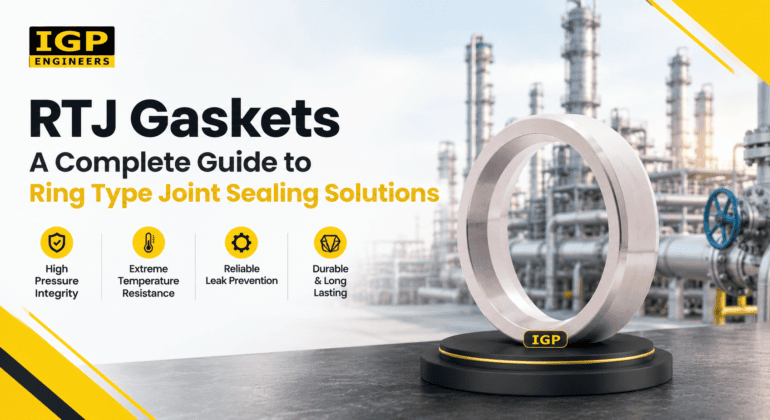

In industries where pipelines, valves, pressure vessels, and flanged connections operate under high pressure and elevated temperatures, reliable sealing is essential for safe and efficient operations. RTJ gaskets (Ring Type Joint gaskets) are metallic sealing components designed for use with specially machined flange grooves in demanding industrial applications.
These gaskets are widely used in oil and gas, petrochemical, refinery, offshore, and other process industries. Depending on the flange design and service requirements, they are available in R, RX, and BX configurations and are manufactured to applicable industry specifications, including ASME B16.20.
This guide explains how RTJ gaskets work, the differences between their main types, available materials, relevant standards, industrial applications, and the factors to consider when selecting an RTJ gasket manufacturer.
What Are RTJ Gaskets?
RTJ gaskets, also known as Ring Type Joint gaskets, are precision-manufactured metallic rings designed to seal flange connections that have matching ring-joint grooves.
Unlike conventional soft gaskets, which seal through the compression of non-metallic or composite materials, RTJ gaskets establish a metal-to-metal sealing interface. Their performance depends on accurate dimensions, suitable material hardness, smooth sealing surfaces, and compatibility with the mating flange grooves.
RTJ gaskets are commonly specified for critical industrial connections where operating pressure, temperature, and process conditions require a suitable metallic sealing solution.
How Do RTJ Gaskets Work?
RTJ gaskets work through controlled plastic deformation at the metal-to-metal contact surfaces.
When the flange bolts are tightened, the gasket is compressed against the machined grooves. The resulting contact stress allows the metallic ring to conform to the sealing surfaces and establish a tight seal.
Depending on the design, system pressure can further energize the sealing interface. However, reliable performance also depends on correct installation, appropriate bolt loading, flange alignment, groove condition, and gasket material selection.
Key factors affecting RTJ gasket sealing performance include:
- Correct gasket dimensions and ring profile
- Compatibility with the flange groove
- Suitable material grade and hardness
- Proper flange surface condition
- Correct bolting and installation procedures
- Compatibility with the operating pressure, temperature, and process media
Selecting the correct gasket and installing it according to the applicable engineering procedures are essential to reducing leakage risks.
Common RTJ Gasket Types Used in Industry
Understanding the differences between RTJ gasket types helps engineers and procurement teams specify the right sealing component for their flange connections. The main configurations are R, RX, and BX.
1. R-Type Gaskets
R-type gaskets are available in two cross-sectional profiles:
- Oval: Used with compatible ring-joint grooves, including certain older groove designs.
- Octagonal: Used with compatible flat-bottomed grooves in applicable flange systems.
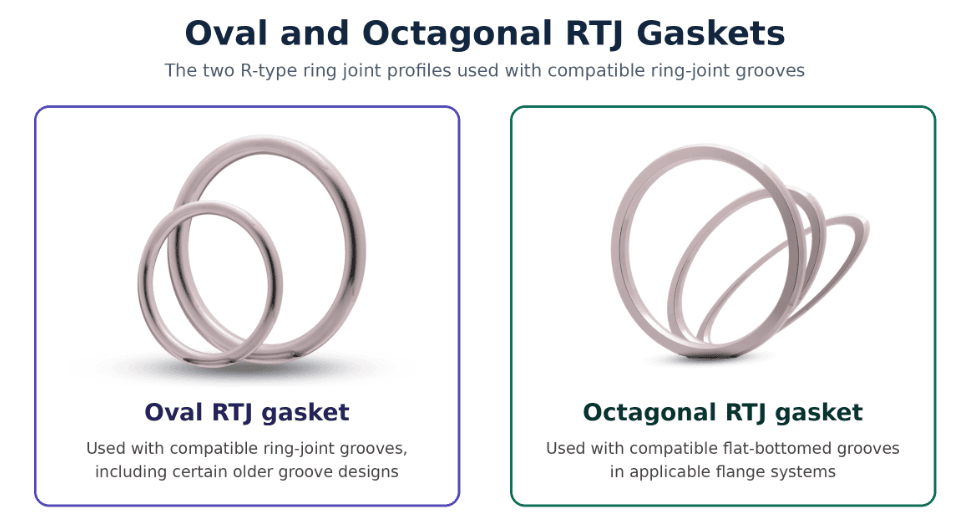
The correct profile depends on the flange groove geometry and the governing specification. An octagonal gasket should not automatically be substituted for an oval gasket without confirming compatibility. R-type gaskets are commonly used with applicable ASME B16.5, ASME B16.47, and API flange systems, depending on the ring number and design specification.
2. RX-Type Gaskets
RX-type gaskets feature a pressure-energized design intended to enhance sealing under suitable operating conditions. They are commonly used in demanding oil and gas applications.
Important considerations include:
- Designed for compatible RX flange-groove configurations
- Pressure-assisted sealing characteristics
- Application in specified API flange systems
- Correct ring number, dimensions, and material selection
RX gaskets can fit compatible grooves associated with R rings of the same number in applicable API 6B configurations. Compatibility must be confirmed against the relevant flange specification; the two gasket styles should not be treated as universally interchangeable.
3. BX-Type Gaskets
BX-type gaskets are designed for compatible high-pressure API 6BX flange connections, including certain wellhead and drilling applications.
Their design differs from R and RX configurations and incorporates features intended for pressure-energized sealing in the specified flange system.
Before selecting a BX gasket, verify:
- Compatibility with the API 6BX flange
- Correct BX ring number and dimensions
- Specified material and hardness
- Applicable pressure and service requirements
BX gaskets are not interchangeable with R or RX gaskets. The correct ring must be selected for the exact flange and groove configuration.
Materials Used for Manufacturing RTJ Gaskets
Material selection is a critical part of RTJ gasket specification. The chosen material must provide suitable mechanical properties and compatibility with the process fluid, operating temperature, pressure, and flange material.
Common metallic gasket materials include soft iron, low-carbon steel, stainless steels, and selected corrosion-resistant alloys.
| Material | General characteristics | Selection considerations |
| Soft iron | Relatively soft metallic material | Suitable where specified by the applicable standard and service conditions |
| Low-carbon steel | General-purpose metallic gasket material | Evaluate corrosion exposure and operating conditions |
| SS304 | General corrosion resistance | Consider the process media and temperature |
| SS316 | Enhanced corrosion resistance in many environments | Verify compatibility with the specific chemicals and service conditions |
| SS321 | Stabilized stainless steel | Consider where elevated-temperature service and material requirements justify its use |
| SS347 | Stabilized stainless steel | Evaluate the specified thermal and corrosion requirements |
| Inconel alloys | Selected grades offer high-temperature and corrosion resistance | Choose the exact alloy according to the service environment |
| Monel alloys | Certain grades provide good resistance in selected marine and chemical environments | Confirm compatibility with the actual process media |
The table provides general guidance rather than a universal material-selection rule. Alloy performance varies by grade and operating conditions, and other materials may be required for particular services.
Why Does Gasket Hardness Matter?
The hardness of an RTJ gasket affects how it interacts with the flange groove during tightening. Gasket materials are generally selected to be softer than the mating flange sealing surfaces so that the gasket deforms preferentially and helps protect the groove.
ASME B16.20 specifies maximum hardness limits for listed ring-joint gasket materials. Material selection and hardness must be checked against the applicable standard and service requirements rather than relying on a single hardness value for all materials.
For critical applications, confirm the material grade, hardness requirements, dimensions, and any required inspection or material documentation before ordering.
Key Advantages of RTJ Gaskets
RTJ gaskets are used where a properly engineered metal-to-metal sealing arrangement is appropriate for the application.
1. Metal-to-Metal Sealing
The gasket establishes a sealing interface against compatible machined flange grooves, making it suitable for specified high-pressure flange systems.
2. Suitability for Demanding Pressure Conditions
RTJ gaskets are used in applications involving high operating pressures when the gasket, flange, and bolting are correctly specified for the service.
3. Temperature Capability
Metallic construction can support elevated-temperature applications, subject to the selected material’s properties and the operating conditions.
4. Application-Specific Material Options
The availability of different metallic grades allows engineers to select materials according to process media, corrosion exposure, temperature, and other service requirements.
5. Reliable Performance with Correct Installation
When the gasket matches the flange design and is installed according to the applicable procedure, it can provide dependable sealing performance. Flange condition, surface finish, bolt loading, and installation practices remain important.
RTJ gaskets are not universally suitable for every flange connection. Their benefits depend on correct specification, compatible equipment, and proper installation.
Industries That Use RTJ Gaskets
RTJ gaskets are commonly used in industries that require metallic sealing solutions for demanding process conditions.
1. Oil and Gas Industry
Applications may include pipelines, wellheads, drilling equipment, and pressure-containing connections designed for RTJ sealing systems.
2. Petrochemical Plants
Suitable flange connections in petrochemical facilities may use RTJ gaskets to contain process fluids under specified pressure and temperature conditions.
3. Refineries
RTJ gaskets are used in compatible refinery equipment and piping systems where the flange design and operating requirements call for metallic ring-joint sealing.
4. Power Generation
Selected high-pressure and high-temperature connections may use RTJ gaskets where the equipment design specifies a compatible ring-joint flange arrangement.
5. Chemical Processing Facilities
RTJ gaskets can be used in chemical process equipment when the gasket alloy is compatible with the process media and the flange design.
6. Offshore and Marine Applications
In suitable offshore equipment, RTJ gaskets provide metallic sealing for specified flange connections. Material selection should account for the actual process fluid and environmental exposure.
Across these industries, gasket selection should be based on the equipment specification, flange design, process conditions, and applicable engineering standards.
Important Standards for Ring Type Joint Gaskets
Industry standards help establish dimensional requirements, material limits, and compatibility between gaskets and flange systems. The applicable standard depends on the equipment and connection being sealed.
ASME B16.20
ASME B16.20 covers metallic gaskets for pipe flanges, including ring-joint gaskets. It addresses relevant design dimensions, tolerances, material requirements, hardness limits, and marking provisions.
ASME B16.5
ASME B16.5 covers pipe flanges and flanged fittings within its scope. It is relevant when specifying compatible ring-joint flange connections and their corresponding gaskets.
ASME B16.47
ASME B16.47 covers large-diameter steel flanges within its scope. Gasket selection must match the specified flange size, class, and ring-joint configuration.
API Specification 6A
API Specification 6A applies to specified wellhead and tree equipment. It is relevant to compatible ring-joint sealing arrangements used in oil and gas drilling and production applications.
The correct standard and edition should be confirmed for each application. Compliance should only be claimed where the product’s design, manufacturing, inspection, and documentation meet the relevant requirements.
How to Choose the Right RTJ Gasket Manufacturer
Selecting an experienced RTJ gasket manufacturer involves more than comparing product prices. The gasket must match the equipment specification, operating conditions, and required quality documentation.
1. Confirm Manufacturing Experience
Look for a manufacturer with relevant experience in metallic gaskets and industrial sealing applications. Review its product range and demonstrated manufacturing capabilities.
2. Check Material Availability
Confirm that the manufacturer can supply the required material grade and provide appropriate material identification or documentation where specified.
3. Verify Standards and Dimensional Requirements
Ensure the proposed gasket matches the required ring type, ring number, dimensions, flange standard, and applicable specification.
4. Evaluate Precision Machining
Accurate dimensions and suitable sealing-surface finish are important for correct seating in the flange groove. Ask about dimensional inspection procedures where required.
5. Review Quality Control and Documentation
Depending on the application, relevant documentation may include material certificates, hardness reports, dimensional inspection records, and product identification markings.
6. Assess Technical Support
A capable supplier should be able to clarify product specifications and help verify gasket selection details against the buyer’s requirements. Final selection should follow the responsible engineer’s approved specifications and procedures.
Evaluating these factors helps procurement teams select an RTJ gasket supplier whose products and documentation match the demands of the application.
Why Choose IGP Engineers for RTJ Gaskets Solutions?
Choosing a metallic gasket supplier requires attention to product specifications, material suitability, and the requirements of the intended application.
IGP Engineers brings 70+ years of industry experience, according to the company’s stated history, in industrial sealing solutions. Its experience in gasket manufacturing provides a foundation for discussing metallic gasket requirements for industrial applications.
Key Considerations for RTJ Gaskets Requirements
- Material Selection: Discuss the required stainless steel or other specified metallic grade based on the service conditions and confirmed product availability.
- Dimensional Requirements: Specify the RTJ type, ring number, flange standard, and required dimensions.
- Application Suitability: Share operating pressure, temperature, process media, and equipment details to help verify the required specification.
- Quality Documentation: Confirm the inspection records, material documentation, and compliance evidence required for the order.
For accurate product selection, buyers should share their flange specifications and operating requirements with the IGP Engineers team. Product availability, manufacturing capabilities, and applicable compliance documentation should be confirmed before placing an order.
Conclusion
RTJ gaskets provide metal-to-metal sealing for compatible flange connections used in demanding industrial applications. Understanding the differences between R, RX, and BX configurations, selecting suitable materials, and verifying the applicable standards are essential steps in specifying the right gasket.
Before ordering, confirm the flange type, ring number, material grade, hardness requirements, operating conditions, and any necessary quality documentation. Working with a technically capable RTJ gasket manufacturer can help ensure that the selected product matches the equipment specification and intended service.
For industrial RTJ gasket requirements, contact IGP Engineers to discuss your application, material specifications, and product availability.
Frequently Asked Questions
1. What are RTJ gaskets used for?
RTJ gaskets are used to seal compatible metal-to-metal flange connections, particularly in specified high-pressure and elevated-temperature applications. Common sectors include oil and gas, petrochemical processing, and refining.
2. What are the main types of RTJ gaskets?
The three main configurations are R, RX, and BX. R gaskets are available in oval and octagonal profiles; RX gaskets feature a pressure-energized design; and BX gaskets are designed for compatible API 6BX flange connections.
3. Which materials are used to manufacture RTJ gaskets?
Common materials include soft iron, low-carbon steel, SS304, SS316, SS321, SS347, and selected corrosion-resistant alloys. Availability and suitability depend on the manufacturer and application requirements.
4. How do I select the correct RTJ gasket?
Confirm the flange standard, ring type and number, groove dimensions, material grade, hardness requirements, operating pressure, temperature, and process media. Refer to the approved equipment specifications and applicable standards before ordering.
5. Are R, RX, and BX gaskets interchangeable?
No. Compatibility depends on the flange and groove configuration. RX may fit compatible R-style grooves in specified systems, while BX requires a compatible BX groove. Always verify the applicable flange standard and gasket specification.
6. Which standards apply to RTJ gaskets?
ASME B16.20 covers metallic ring-joint gasket requirements. ASME B16.5 and ASME B16.47 cover relevant flange systems, while API Specification 6A applies to specified wellhead and tree equipment. The correct standard depends on the application.
7. Can RTJ gaskets be reused?
RTJ gaskets are generally replaced after a joint is disassembled, particularly in critical or high-pressure services. Reusing a previously compressed ring can compromise sealing reliability. Follow the equipment manufacturer’s instructions and the site’s approved maintenance procedures.
8. What information should I provide when requesting an RTJ gasket quote?
Provide the RTJ type and ring number, flange standard and size, pressure class or rating, material grade, operating temperature, process media, required quantity, and any specified inspection or material documentation. A flange drawing or equipment specification can help clarify requirements.