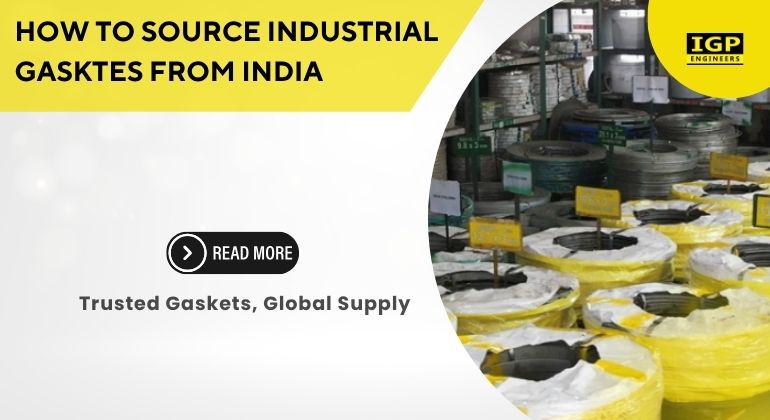

India has rapidly emerged as a global manufacturing powerhouse, particularly in the engineering and industrial components sector. Among these, industrial gaskets from India are gaining strong traction across international markets due to their balance of cost-efficiency, durability, and compliance with global standards. According to recent engineering export trends, India continues to expand its footprint in supplying critical sealing solutions to industries such as oil & gas, petrochemicals, power generation, and pharmaceuticals.
This guide walks you through a step-by-step approach to source gaskets India export, ensuring quality, compliance, and smooth logistics.
Why Industrial Gaskets from India Are in High Demand Globally
India’s prominence in gasket manufacturing is driven by a combination of factors that appeal to global buyers:
- Cost Competitiveness: Lower manufacturing costs without compromising quality
- Skilled Workforce: Expertise in precision engineering and materials science
- Global Certifications: Availability of ISO and ASME compliant products
- Export Infrastructure: Strong logistics network connecting to major global ports
With increasing demand from the Middle East, Europe, and Southeast Asia, Indian manufacturers are continuously upgrading their capabilities to meet international standards. This makes industrial gasket wholesale India an attractive option for bulk buyers and distributors.
Step-by-Step Guide to Source Gaskets India Export
Step 1: Identify Your Application Requirements
The first and most critical step in the source gaskets India export process is to establish precise technical requirements. Buyers should carefully evaluate operating conditions such as pressure levels, temperature ranges, and the type of media involved, whether it is chemicals, steam, oil, or gas. Additionally, identifying flange types, sizes, and dimensional tolerances is essential.
Step 2: Shortlist an Indian Gasket Supplier for Oil and Gas
Selecting a reliable Indian gasket supplier for oil and gas is key to successful sourcing. Begin by assessing the supplier’s industry experience, especially in sectors like petrochemicals, refineries, and power plants. Review their client portfolio, export history, and ability to handle large-scale or customized orders.
Suppliers with proven expertise in your specific application area are more likely to deliver consistent quality and meet stringent operational standards. Learn more about our oil & gas gasket solutions.
Step 3: Verify Certifications and Standards
When sourcing from international markets, certifications are a critical quality benchmark. Always ensure the supplier offers ASME certified gasket India products that meet globally recognized standards.
Additionally, request Material Test Certificates (MTC) to confirm the chemical and mechanical properties of the materials used. These certifications and documents validate product integrity and ensure compliance with international procurement norms.
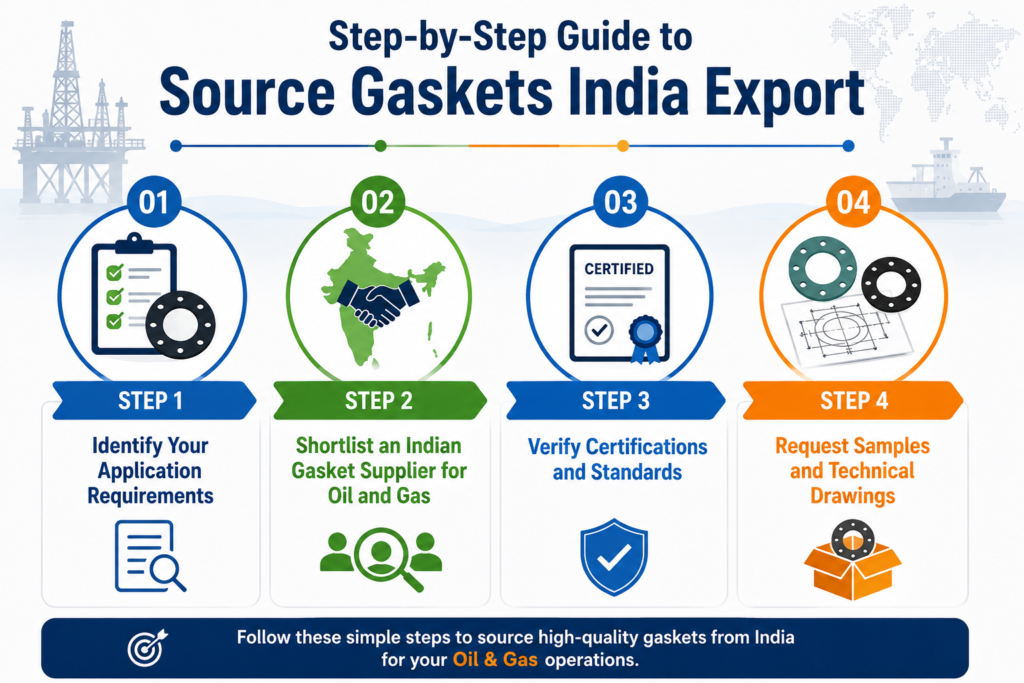
Step 4: Request Samples and Technical Drawings
Before committing to bulk procurement, it is advisable to request product samples and detailed technical documentation. Evaluate physical samples to assess build quality, finishing, and dimensional accuracy.
If your application is critical, conducting independent performance testing can further ensure suitability. This step significantly reduces procurement risks and builds confidence in the supplier’s manufacturing capabilities.
✓ Sample Evaluation Checklist
- Material grade matches specification
- Dimensional accuracy within ±0.5mm tolerance
- Surface finish meets ASME standards
- Proper packaging for international shipping
- Complete technical drawings provided
If your application is critical, conducting independent performance testing can further ensure suitability. This step significantly reduces procurement risks and builds confidence in the supplier’s manufacturing capabilities.
Need help evaluating samples? Contact our technical team for free consultation
Step 5: Compare Pricing and MOQs
While India offers competitive pricing, buyers should:
- Compare multiple quotes
- Evaluate cost vs durability
- Understand Minimum Order Quantities (MOQs)
Bulk buyers looking for industrial gasket wholesale India options can negotiate better pricing and long-term contracts.
Types of Industrial Gaskets You Can Buy from India
India manufactures a wide variety of gaskets catering to different industries. Here are the most commonly exported types:
1. Spiral Wound Gaskets
Widely used in high-pressure and high-temperature environments, these are ideal for refineries and power plants. Many buyers specifically buy spiral wound gaskets India due to their durability and compliance with ASME standards.
- Applications: Refineries, chemical plants, power generation, offshore platforms
- Pressure Rating: Up to 2500 PSI
- Temperature Range: -200°C to +850°C
2. Ring Type Joint Gaskets
Designed for extreme pressure applications, RTJ gaskets are commonly used in offshore drilling and oil refineries.
- Applications: Wellheads, Christmas trees, high-pressure piping
- Material: Soft iron, stainless steel, Inconel
- Standards: ASME B16.20, API 6A
3. PTFE Gaskets
The PTFE gaskets are known for exceptional chemical resistance, making them perfect for pharmaceutical and chemical processing industries requiring non-reactive and long-lasting sealing materials.
- Applications: Pharmaceutical, food processing, chemical plants
- Chemical Compatibility: Acids, alkalis, solvents
- Temperature Range: -240°C to +260°C
4. Insulation Kit Gaskets
The insulation kit gaskets are designed to prevent galvanic corrosion and electrical leakage in pipeline systems, ensuring safe, reliable sealing performance in oil, gas, and industrial applications.
- Components: Gasket, sleeves, washers
- Standards: ISO 15589, NACE
- Applications: Cathodic protection systems
5. Customized Industrial Gaskets
The custom-designed gaskets are manufactured using advanced CNC technology, delivering tailored sealing solutions that meet specific industrial requirements with high precision and consistent quality. With such a diverse portfolio, sourcing industrial gaskets from India allows buyers to meet multiple application needs from a single supplier.
Checklist Before Placing Your Order
To ensure a smooth and risk-free source gaskets India export process, buyers must carefully validate several critical factors before placing orders. Always confirm ASME certified gasket India compliance along with ISO certifications to ensure global quality standards. Check material specifications, grades, and precise dimensional tolerances for application accuracy.
Evaluate packaging standards suitable for international shipping, along with detailed inspection and testing reports. Proper export documentation such as invoices, packing lists, and Certificate of Origin (COO) ensures seamless customs clearance and consistent product quality assurance.
Gasket Import HS Code India and Duties
Understanding import regulations is essential for global buyers.
- HS Code: Typically falls under 8484
- Middle East: Often low or zero import duty
- European Union: Subject to VAT and customs duty
- Southeast Asia: May benefit from preferential tariffs under trade agreements
Using the correct gasket import HS code India ensures smooth customs clearance and avoids delays.
Why Choose IGP Engineers – A Trusted Industrial Gasket Manufacturer India
We at IGP Engineers believe that reliability and technical expertise are the foundation of effective sealing solutions. As a trusted industrial gasket manufacturer India, we offer a comprehensive range of high-performance gaskets designed to meet diverse industrial demands.
Our Key Strengths:
- Extensive Product Portfolio: We manufacture spiral wound, ring type joint, PTFE, insulation kit, and custom-engineered gasket solutions.
- Customization Capability: Our CNC machining and CAD-based design systems enable highly precise, application-specific gasket manufacturing.
- Global Compliance: Our products are engineered in line with ASME and other international quality standards for global acceptance.
- Export Experience: We consistently serve clients across oil and gas, petrochemical, power, and heavy engineering sectors worldwide.
With a strong commitment to quality, precision engineering, and customer-focused manufacturing, we continue to position ourselves as a dependable Indian gasket supplier for oil and gas industries across global markets.
Conclusion
Sourcing industrial gaskets from India offers a powerful combination of cost savings, quality assurance, and global compliance. With a structured approach, starting from requirement analysis to supplier verification and logistics planning, international buyers can significantly optimize their procurement process.
Partnering with IGP Engineers ensures access to high-performance sealing solutions tailored to your industry needs. Whether you are looking to scale operations or improve supply chain efficiency, India remains a strategic destination for gasket sourcing.
If you are ready to streamline your imports and secure reliable supply, now is the time to explore the opportunities offered by India’s growing gasket manufacturing sector.
FAQs
1. What makes industrial gaskets from India a preferred sourcing option?
India offers cost-effective manufacturing, global-quality standards, and reliable export capabilities, making it a strong hub for industrial gasket sourcing.
2. Which types of gaskets are commonly exported from India?
Spiral wound, ring type joint (RTJ), PTFE, insulation kit, and custom-engineered gaskets are widely exported for industrial applications.
3. How do I ensure quality when sourcing from Indian suppliers?
Check ISO and ASME certifications, Material Test Certificates (MTC), and supplier experience in your specific industry.
4. What is the HS code for importing industrial gaskets?
Most industrial gaskets fall under HS Code 8484, used for sealing and gasket products in international trade classification.
5. Why choose IGP Engineers as a supplier?
IGP Engineers provides certified, high-precision, and application-specific gasket solutions with strong export experience across oil & gas and industrial sectors.