
When it comes to pipeline sealing, every part should be carefully noted. A minor leak at a flange joint in a high-pressure pipeline can lead to major consequences, compromised safety, environmental hazards, and significant operational losses.
Henceforth, choosing the right Flange gaskets for pipelines is not just a maintenance decision; it is a critical engineering choice that impacts the entire pipeline’s performance and longevity.
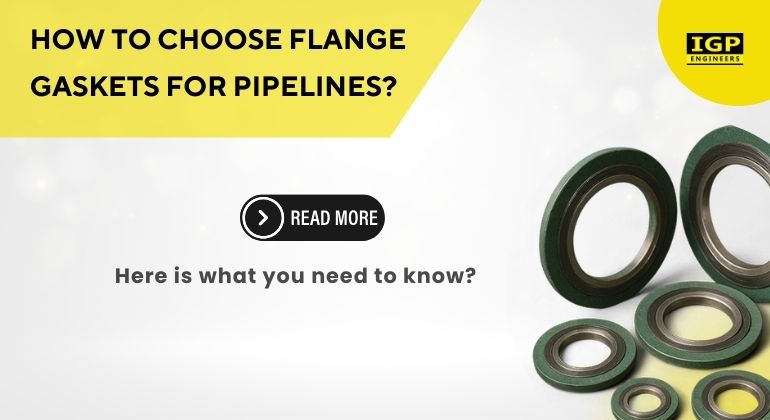
In this complete guide, we help you understand what flange gaskets are, their importance in pipelines, how to select the right one, and why IGP Engineers is the trusted choice for sealing critical pipeline systems worldwide.
What Are Flange Gaskets?
Flange gaskets are mechanical seals placed between two flanged joints to prevent leakage of fluids or gases. They work by filling the microscopic gaps and irregularities between flange faces, ensuring a tight and leak-proof seal, ensuring proper fluid flow.
Industrial pipeline sealing solutions are essential in pipeline systems, especially where the transported media; be it gas, water, steam, or chemicals, must remain completely sealed under varying pressure and temperature conditions.
Depending on the application, flange gaskets are made from different materials and configurations, each with specific sealing properties suited for Industrial pipeline sealing solutions.
Why Are Flange Gaskets Critical for Pipeline Integrity?
Pipeline systems, especially those in industries such as oil and gas, nuclear power, and petrochemical refining, do work under extreme pressures and temperatures. In such environments, Flange gaskets for pipelines are common connection points as well as potential weak points if not sealed correctly.
The primary reasons flange gaskets are indispensable include:
- Leak Prevention: Prevents fluid or gas leaks at connection points, maintaining operational safety and efficiency.
- Safety and Compliance: Reduces the risk of hazardous leaks which may lead to dangerous hazards such as fires, explosions, or environmental damage.
- Corrosion Resistance: Acts as a barrier between reactive fluids and metallic flanges.
- Maintains System Pressure: Ensures that the pressurized media remains contained throughout the pipeline.
- Long-Term Reliability: With the right selection, gaskets contribute to reduced maintenance and fewer system downtimes.
Types of Flange Gaskets Manufactured by IGP Engineers
As a top-tier industrial gasket manufacturer, IGP Engineers offers a comprehensive portfolio of flange gaskets tailored to meet the needs of critical pipeline projects worldwide.
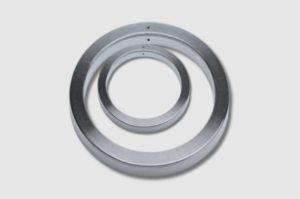
1. Ring Type Joint (RTJ) Gaskets
- Designed for high-pressure and high-temperature applications.
- Commonly used in oil and gas exploration and offshore platforms.
- Metal-to-metal sealing with oval or octagonal cross-sections.
2. Spiral Wound Gaskets
- Combination of metal winding and soft filler material.
- Ideal for fluctuating pressure and temperature environments.
- Suitable for refineries, chemical plants, and heat exchangers.
3. Kammprofile Gaskets
- Serrated metal core with soft sealing layers.
- Excellent for high bolt loads and critical sealing.
- Used in heat exchangers and pressure vessels.
4. Corrugated Metal Gaskets
- Multi-layered metallic construction for high flexibility.
- Suitable for thermal cycling and corrosive media.
5. Jacketed Gaskets
- Soft filler covered by a metallic jacket (like stainless steel or Inconel).
- Common in equipment with narrow flanges or uneven loads.
6. Soft Cut Gaskets (PTFE, CAF, Graphite)
- Economical solutions for low to moderate pressure.
- Chemical-resistant options for various industrial uses.
How to Choose the Right Flange Gasket for Pipelines?
Choosing the wrong gasket can result in leaks, material degradation, or even tragic failure. Thereby, It is better to consider the following factors to ensure the optimal gasket is selected for your application:
1. Operating Pressure and Temperature
High-pressure pipelines require metallic or semi-metallic gaskets like RTJ or spiral wound types, while lower pressure systems may use soft cut gaskets.
2. Media Compatibility
The Gasket materials for pipelines must resist chemical attack from the process media (e.g., oil, steam, gas, acids, or alkalis).
3. Flange Surface Finish
Flange face roughness influences gasket sealing performance. A smoother finish may require a softer gasket or a gasket with better compressibility.
4. Gasket Material
The material should match the flange material in thermal expansion and corrosion resistance. Common materials include graphite, PTFE, stainless steel, and Inconel. Chemical-resistant, non-stick gaskets such as PTFE gaskets for pipelines are especially ideal for aggressive pipeline media.
5. Industry and Safety Standards
Gaskets must comply with standards like ASME B16.20, API 6A, and others relevant to oil & gas, petrochemical, and nuclear sectors.
6. Installation and Maintenance Factors
Ease of installation, availability of spares, and maintenance intervals also impact long-term gasket performance.
Why Ring Type Joint Gaskets Are Preferred for Critical Pipelines?
RTJ gaskets are widely regarded as the top preferable for sealing high-pressure and high-temperature pipelines. IGP’s RTJ gaskets are manufactured with stringent tolerances and material specifications, making them ideal for:
- Offshore oil and gas platforms
- High-pressure steam and process pipelines
- Blowout preventers and subsea equipment
They provide metal-to-metal sealing, ensuring no soft material degradation over time. Moreover, their resistance to deformation under bolt load makes them highly reliable for critical applications.
Common Mistakes to Avoid While Selecting Flange Gaskets
Even experienced engineers can sometimes overlook these pitfalls:
❌ Material mismatch: Using incompatible materials that degrade or corrode with media.
❌ Underestimating pressure/temperature: Selecting gaskets not rated for the system’s extreme conditions.
❌ Ignoring flange surface finish: Poor surface finish can lead to incomplete sealing.
❌ Not verifying standard compliance: Using non-certified gaskets in regulated environments can lead to violations or failures.
Comparison Table: Common Flange Gaskets for Pipeline Applications
|
Gasket Type |
Material Composition | Pressure & Temp Suitability | Best For |
Key Advantages |
| Solid metal (SS, Inconel, etc.) | Very high pressure & temperature | Oil & gas pipelines, subsea systems |
Metal-to-metal seal, API/ASME compliant |
|
| Metal winding + filler (Graphite/PTFE) | Medium to high | Refineries, chemical plants | Flexibility, resists thermal cycling | |
| Serrated metal core + soft layers | High | Heat exchangers, high-load flanges |
Excellent seal integrity, reusable design |
|
| Corrugated Metal Gasket | Corrugated metal with sealing layer | Medium | General pipeline use, steam lines |
Good compressibility, thermal stability |
|
Jacketed Gasket |
Soft filler with metal jacket | Medium | Heat exchangers, vessel heads | Balanced performance in uneven load situations |
| PTFE Gasket | Virgin or expanded PTFE | Low to medium | Chemical pipelines, corrosive media |
High chemical resistance, non-stick surface |
|
CAF Gasket |
Compressed Asbestos Fiber (or non-asbestos) | Low to medium | Water, oil, steam applications |
Economical, easy to cut and install |
Key Benefits of Using High-Quality Flange Gaskets from IGP Engineers
With over 70 years of experience, IGP Engineers delivers unmatched benefits to pipeline projects around the world:
1. Uncompromised Sealing Integrity
Every gasket is engineered for precise performance, preventing leaks even under severe mechanical and thermal loads.
2. Longer Operational Life
Premium materials and precise tolerances ensure that IGP gaskets outlast standard alternatives.
3. Reduced Maintenance Costs
Fewer leaks mean fewer shutdowns and reduced manpower for inspections or replacements.
4. Global Standards Compliance
IGP gaskets meet or exceed all major international codes including ASME, API, NORSOK, and ISO.
5. Custom Solutions for Every Sector
Whether it is LNG terminals, nuclear plants, or refineries, IGP provides tailor-made solutions for every challenge.
6. Proven Track Record
Trusted by energy giants and EPC firms, IGP’s gaskets are used in some of the most demanding pipeline systems in the world.
Trusted by Global Pipeline Projects
IGP Engineers is not just a gasket supplier; it is a sealing solutions partner for major energy infrastructure worldwide. With exports to over 70 countries and approvals from leading project consultants, the company plays a vital role in:
✅ Cross-country pipeline networks
✅ Offshore oil rigs and FPSOs
✅ Nuclear power stations
✅ Petrochemical and LNG terminals
Every gasket is manufactured in ISO-certified facilities in India, supported by in-house engineering, R&D, and metallurgy expertise.
Final Thoughts
Flange gasket selection is not just about the product, it is all about performance, precision, and peace of mind.
At IGP Engineers, India’s first indigenous gasket manufacturer and supplier, a trusted name since 1955, flange gaskets are engineered with precision and reliability in mind.
As a global supplier to over 70 countries, IGP supports critical infrastructure in oil and gas, power, nuclear, and petrochemical industries, providing gasket solutions that stand the test of pressure, temperature, and time.
We offer a complete range of standard and custom-engineered flange gaskets designed to meet the demands of global pipeline systems. With more decades of industry leadership, we deliver reliable sealing that keeps your pipelines leak-proof, safe, and operational.
Let us help you seal your success.
Explore our range of flange gasket solutions, or contact us to find the perfect fit for your pipeline project.
Frequently Asked Questions
1. What is the purpose of a flange gasket in a pipeline?
A flange gasket ensures a leak-proof seal between two flanges, preventing fluid or gas leaks under pressure or temperature variations.
2. Which type of gasket is best for high-pressure pipelines?
Ring Type Joint (RTJ) gaskets are ideal for high-pressure and high-temperature pipeline applications due to their metal-to-metal sealing.
3. How do I choose the right flange Gasket materials for pipelines?
Consider the pipeline’s pressure, temperature, media compatibility, and industry standards before selecting the Gasket materials for pipelines.
4. Can I reuse a flange gasket?
It is not recommended. Reusing gaskets can compromise sealing integrity and lead to leaks or failures.
5. Do IGP Engineers offer custom gasket solutions?
Yes. IGP Engineers manufactures custom-engineered gaskets tailored to specific pipeline and industry requirements.